From the work
Select any figure to view it at full size.
Agrera Robotics is a research and development company building perception systems for robots that operate outside the laboratory — in homes, in the field, and in facilities where conditions change from one day to the next.
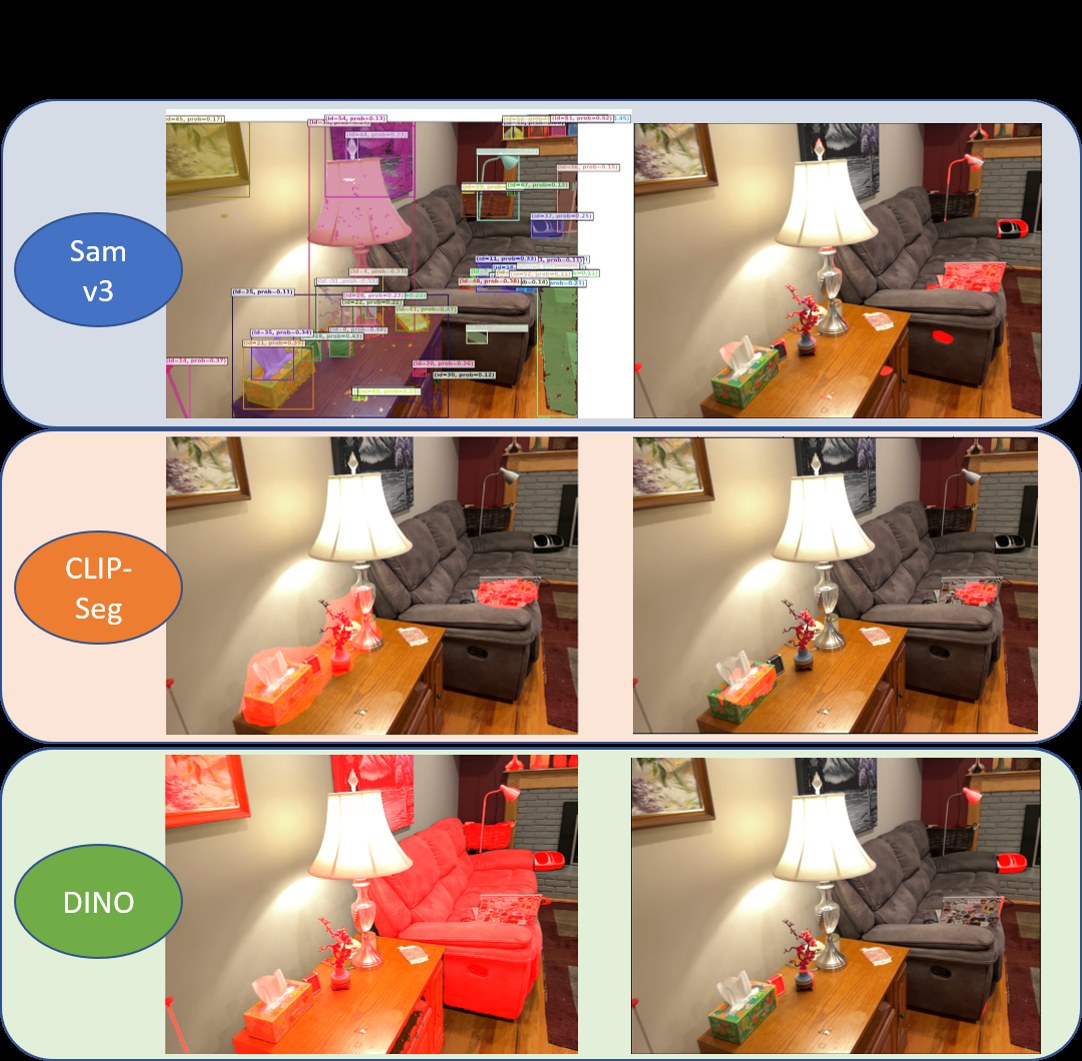
Our work centers on learning from very few labeled examples. Real deployments rarely come with a large annotated dataset, and often the thing a robot most needs to recognize is the thing it has seen least. We combine foundation models with self-supervised and low-shot training so that a system can be brought to a new environment, or a new object of interest, without a labeling campaign first.
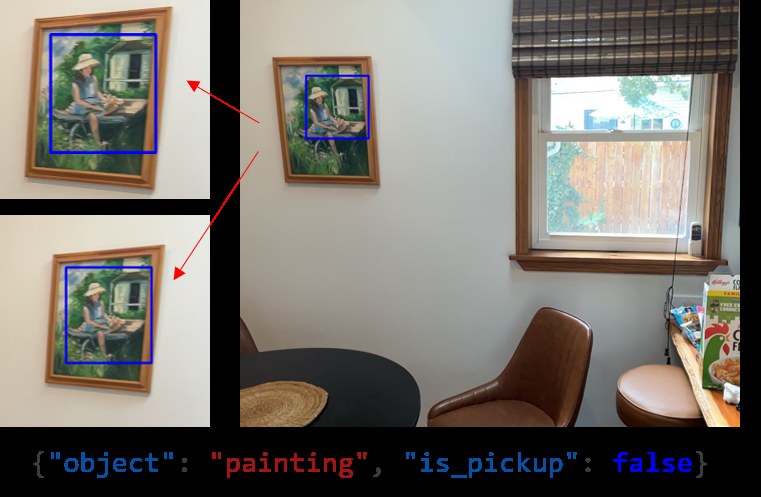
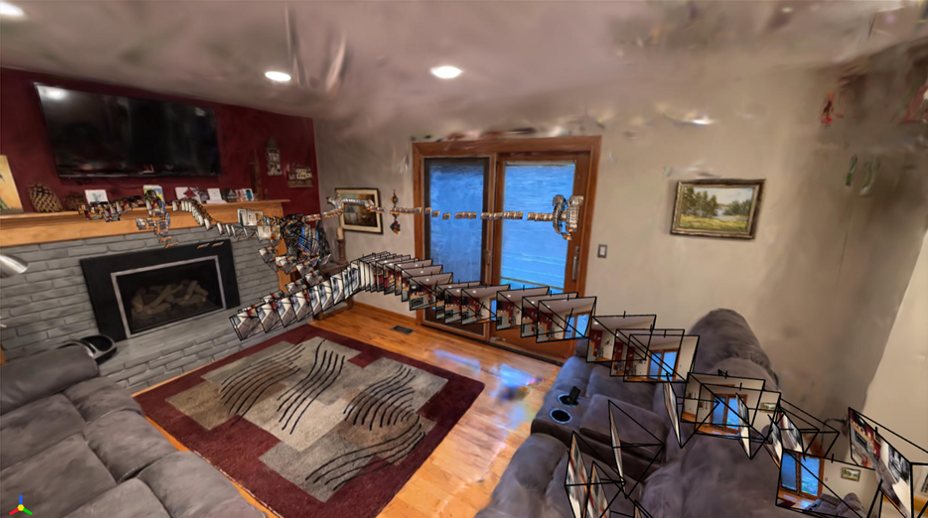
A service robot that moves through the same space repeatedly can notice what changed since its last run, and use those changes to decide what needs doing. Our published work covers the full pipeline: aligning runs to a common frame, segmenting objects of interest, and comparing them across visits. The harder problem is knowing which changes matter, and we use vision-language models to set aside the ones that do not.
The same comparison across repeated visits applies at larger scales. In a tunnel, a warehouse, or a plant, the changes worth flagging are objects left behind, doors that should not be open, and disturbances to a space that is expected to stay fixed. This is a direction the underlying technique extends to naturally, and one we are actively developing.
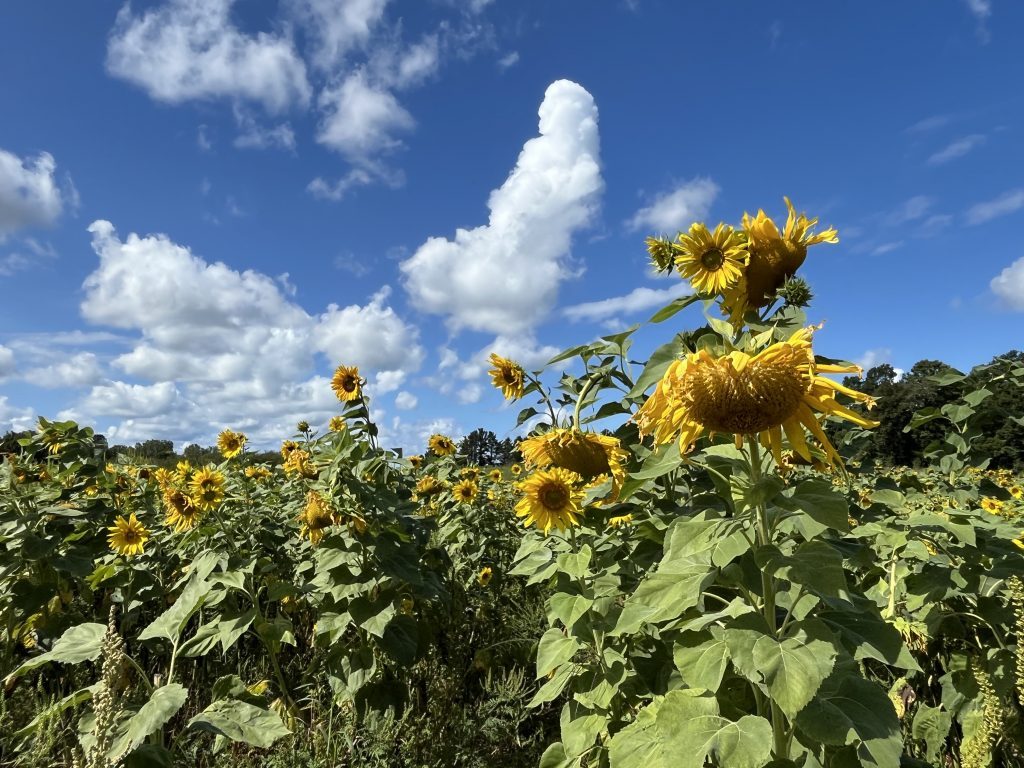
Crop disease is a low-shot problem by nature: symptoms are sparse in the field, expensive to annotate, and easily confused with ordinary seasonal change. We are building multi-spectral detectors that combine color and thermal imagery to find disease in vineyard canopy, trained on largely unlabeled field collections.
Select any figure to view it at full size.
A complete list is available at ORCID 0000-0001-8194-7770.